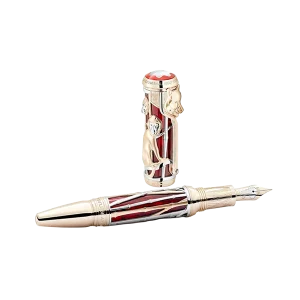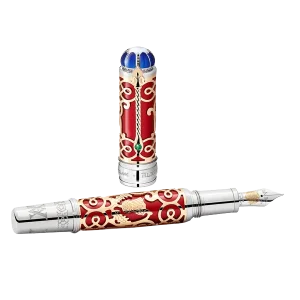

A Montblanc pen is rarely bought for what it does. It’s bought, kept, and passed down, and displayed, for what it means. Somewhere between a nib and a bottle of ink, these instruments crossed a line most objects never cross. From tool to treasure. That crossing is what The Scholars’ Treasure Collection was built to explore. It’s the question worth sitting with before we go any further. What makes an object worth treasuring, generation after generation? Long after its original purpose has been fulfilled a thousand times over?
Montblanc has spent more than a century answering that question with wax, resin, gold, and craftsmanship. Individual editions of the brand’s most celebrated pens have honored artists, authors, and historical figures. A Patron of Art here, a Writers Edition author there. A face from the Great Characters line elsewhere. Each one a small monument disguised as a writing instrument. This essay won’t dwell on any single one of those stories. Each deserves its own telling, and each will get one, essay by essay, as The Scholars’ Treasure Collection unfolds. Instead, consider this the doorway. An introduction to what makes a Montblanc pen worth this kind of attention in the first place. To the collection that has grown up around that belief.
The Montblanc story begins modestly. In 1906, a Hamburg banker and a Berlin engineer began producing simple fountain pens under the name Simplo Filler Pen Co. It would be nearly two decades before the company found the design that would define it. In 1924, Simplo introduced a pen it called the Meisterstück. German for “masterpiece”. The name proved less like marketing and more like prophecy. The Meisterstück became, and remains, the flagship of the brand. A cigar-shaped silhouette, a white six-pointed star standing in for the snow-capped peak of Mont Blanc itself. A level of finish that turned a writing tool into an object worth naming.
What separates a Montblanc pen from the countless writing instruments manufactured in the century since is not that it writes especially well, though it does. It’s that the company chose, again and again, to treat the pen as a canvas rather than a commodity. Using it to honor the writers, artists, and thinkers whose work shaped how we understand the world. A pen becomes a Patron of Art edition, a Writers Edition tribute, a Great Character’s namesake, and suddenly it isn’t just holding ink anymore. It’s holding a story.
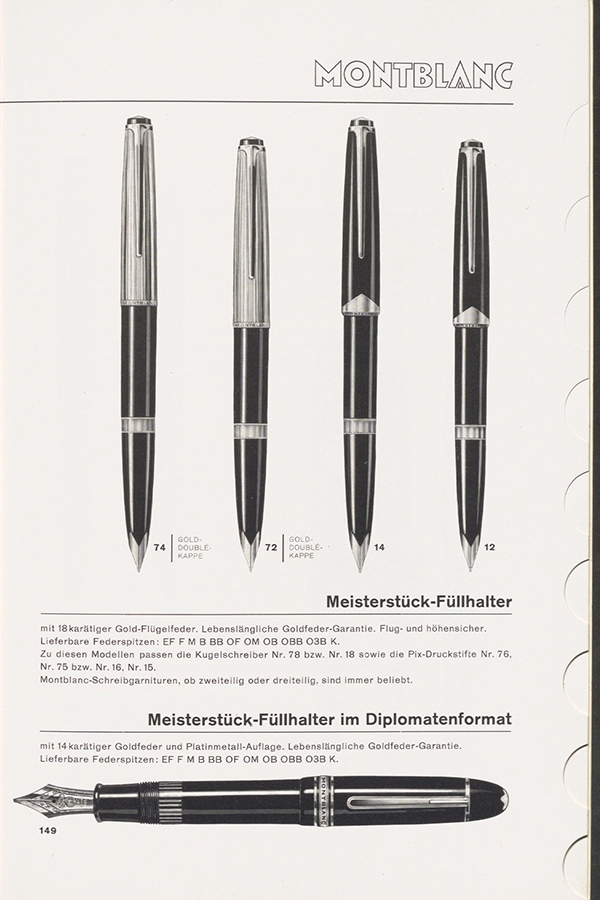
The pens in Montblanc’s highest tier—what the brand calls “High Artistry”—are built the way a jeweler builds a commission, not the way a factory builds a product. Precious resins are hand-finished. Gold and platinum are worked into caps and clips by hand. Nibs are cut, tested, and adjusted individually. The result is a piece that can take months, sometimes longer, to complete. One where no two pens, even within the same limited edition, are perfectly identical.
None of this craftsmanship exists for its own sake. Every design choice on a tribute pen is meant to say something about the person or era it honors. A nib might be engraved with a motif drawn from the honoree’s life’s work. A cap might echo the color of a signature garment, a symbol from a famous portrait, or a detail plucked from history and rendered in gold. Read correctly, a Montblanc pen isn’t decorated—it’s annotated, the way a biographer annotates a life.
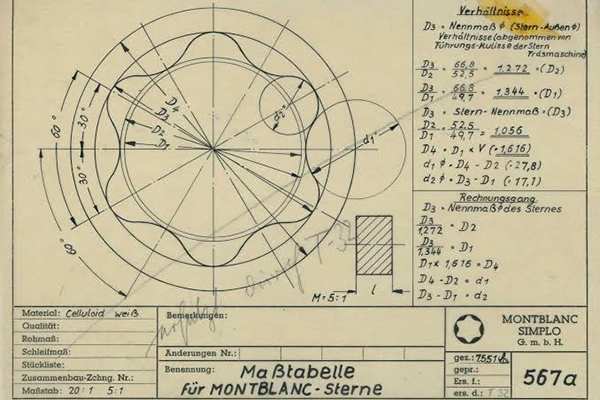
What makes this craftsmanship worth pausing on isn’t the materials list—it’s what the materials are in service of. A precious resin barrel or a hand-engraved nib means little on its own. It means something when you understand it as a decision. Someone, somewhere in Montblanc’s workshops, decided that this particular detail was the right way to represent this particular person’s legacy. That’s the difference between manufacturing and curating. It’s the reason these pens end up in collections rather than junk drawers.
Russ Rosenzweig didn’t set out to become a collector of rare pens. As the co-founder of Round Table Group—the firm credited with pioneering the modern expert witness search and referral industry—his world was built around scholars, attorneys, and the written word they all depended on. Along the way, he found himself drawn to the Montblanc pens that so many of the professors and litigators he worked with carried. Instruments that seemed to understand, the way a good expert witness does, that credibility and craftsmanship are not the same thing as flash.
That appreciation grew into something more deliberate. One of the most extensive collections of Montblanc’s High Artistry pens in the country. Gathered not as an investment but as a kind of parallel memoir. Each pen in The Scholars’ Treasure Collection marks a chapter of Rosenzweig’s own journey. In the same way each pen marks a chapter in the life of the figure it honors. The full story of any single pen in the collection—why it was acquired, what it represented at the time—is a story for its own essay. Here, it’s enough to say that the collection as a whole represents something Rosenzweig has spent his career believing. That the tools scholars and professionals rely on are worth treating with the same reverence as the ideas those tools help commit to paper.
Return, for a moment, to the question this essay opened with: what makes something worth treasuring? The answer, it turns out, has less to do with rarity or price than with intention. A Montblanc pen earns its place in a collection because someone—a craftsperson, a brand, a collector—decided it should mean something, and then built or preserved it accordingly.
That’s a leadership lesson as much as a design principle. The entrepreneurs, professors, and litigators drawn to these pens tend to understand instinctively that legacy isn’t an accident. It’s the result of deciding, early and often, what’s worth doing with excellence rather than adequacy. A well-made pen is a small, physical argument for that same discipline in work and in life.
It would be easy to see a room full of pens as a room full of objects. The Scholars’ Treasure Collection asks readers to see something else: a room full of preserved decisions. Every pen represents a moment someone chose to honor a person, idea, or a piece of history in a form built to outlast them. Preserving that—the pens, and the stories behind them—is a way of making sure those decisions keep speaking after the people who made them are gone. That’s the quiet purpose behind a collection like this one, and it’s a purpose worth taking seriously.
This essay is an introduction, not a conclusion. The pens referenced here in passing—the Patron of Art honorees, the Writers Edition tributes, the Great Characters icons. Each have a fuller story waiting in their own Collection Essays, published one at a time as The Scholars’ Treasure continues to grow.
For readers in Southern California, the collection is based in Newport Beach and open to those who’d like to see these pieces in person. An experience no product photo can fully capture. Additionally you can also read the full story behind the collection in Russ Rosenzweig’s book, or reach out directly with questions about visiting.
Inquire about a visit to view the collection: Click Here
I didn’t set out to build a collection. I set out to do good work, surrounded by people who took ideas seriously–and somewhere along the way, I noticed that the pens they carried took those same ideas seriously, in their own quiet way. Every pen in this collection reminds me that craftsmanship and conviction usually come from the same place. I hope, as you read the stories behind each one, you’ll notice that too.
— Russ Rosenzweig
What makes a Montblanc pen valuable?
Materials, craftsmanship, and rarity all play a role. However Montblanc’s most sought-after pens—particularly limited-edition tribute pens—gain much of their value from the story and symbolism built into their design.
What is Montblanc’s Meisterstück known for?
The Meisterstück, introduced in 1924, is Montblanc’s flagship pen line. It is the design most associated with the brand, recognized for its cigar-shaped silhouette and signature white star emblem.
What does “High Artistry” mean for a Montblanc pen?
High Artistry designates Montblanc’s most elaborate, hand-finished pens, often produced in very limited numbers. Involving techniques like hand engraving, gem-setting, and precious-metal work.
Where can I see rare Montblanc pens in person?
The Scholars’ Treasure Collection, based in Newport Beach, California, offers visitors the chance to view rare Montblanc pens up close. Details are available on the Visit the Collection page.
What is The Scholars’ Treasure Collection?
It’s a collection of rare Montblanc pens assembled by Russ Rosenzweig, co-founder of Round Table Group, alongside related artwork and writing. Each pen tied to a chapter of history and a chapter of his own journey.
Are Montblanc pens considered collector’s items?
Yes. Basically limited-edition and High Artistry Montblanc pens are widely collected, particularly tribute editions. Honoring historical and artistic figures, which often become more sought-after over time.
How is a Montblanc pen made?
Montblanc’s most elaborate pens are largely handmade, involving hand-finished resin or precious-metal barrels. Individually cut and tested nibs, and detailed engraving or embellishment work that can take months to complete.
A Montblanc pen asks more of you than a glance. Look closely enough, and a pen designed a century after its subject’s death, or the exact same year, can still tell you what that person stood for. Through a color, a symbol, an engraving most people will never notice. That’s the craftsmanship. Additionally layer in the story of why someone chose to collect that pen in the first place, and you start to understand what The Scholars’ Treasure Collection is really preserving. Not just pens, but the decisions and devotion that made them worth keeping. Consider this your introduction. The individual stories—pen by pen, figure by figure—are just getting started.